Gear · Analysis
Mbappé Joins On. What Does It Take to Build a Soccer Brand?
A major signing gives On an audience. The next test is making boots that players want to wear.
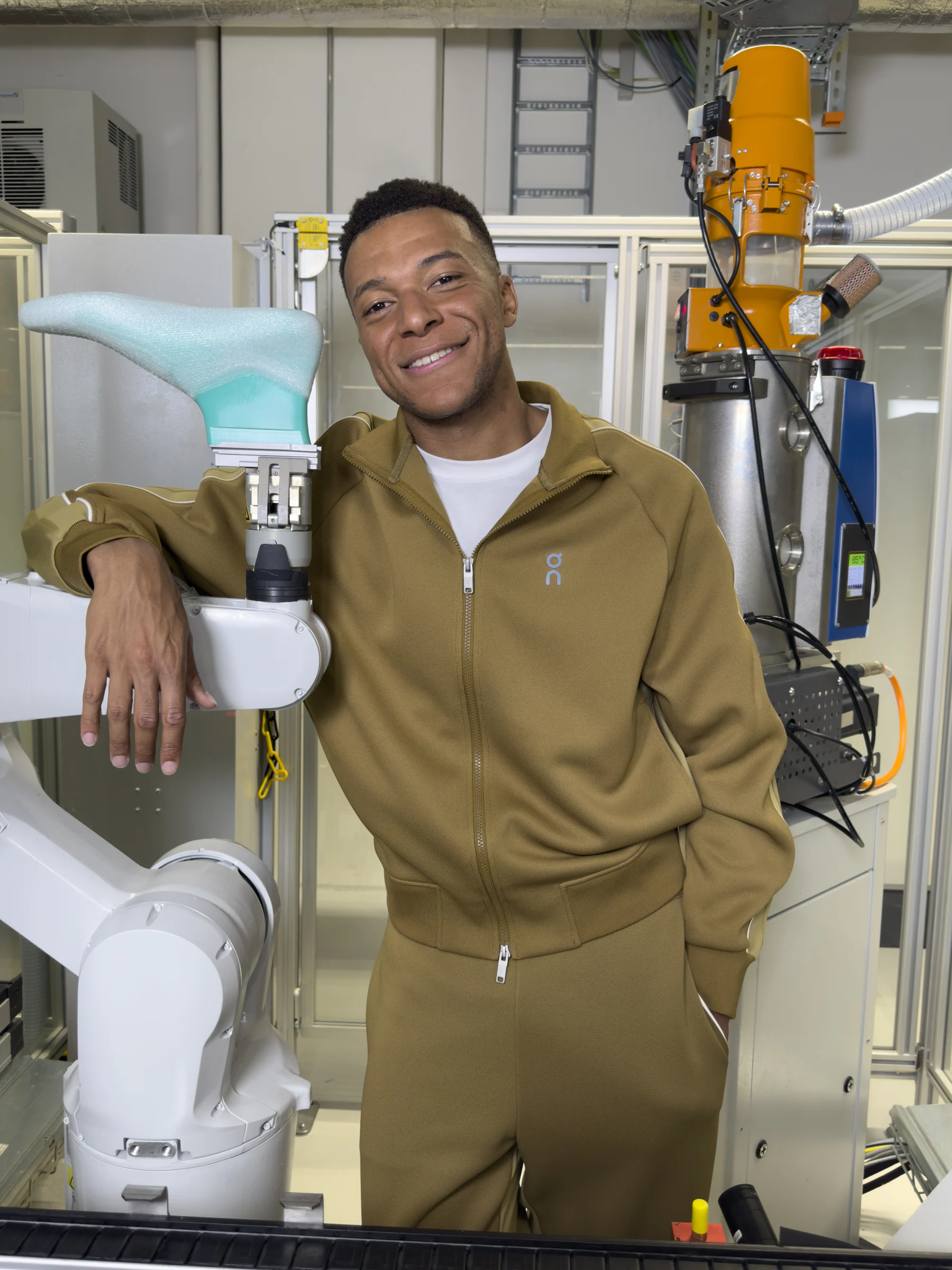
Photo: © Juergen Teller. Courtesy of On. · Official On football campaign, September 2026, photographed at On Labs in Zurich. All rights reserved. Press image resized for web; display crops vary.
Kylian Mbappé has joined On after his long association with Nike. The switch, reported on September 18, brings one of soccer’s most recognizable players to a company entering the sport. Reuters reports that the agreement includes cash and equity, with financial details undisclosed, and that On plans to launch its first boots in 2027. Reuters reporting.
The announcement is immediately interesting as a sponsorship story. It is more useful to players when considered as a product question. What will On make, who will be able to use it, and what reason will they have to change the boots they already trust?
A signature on a contract can establish a partnership. Building a soccer brand requires that relationship to survive a different setting: the training session, the fitting room and the decision to buy another pair.
A role in the product
In its September 18 announcement, On says Mbappé will contribute to the development and testing of future footwear and apparel as well as serve as a global ambassador. Thierry Henry is its director of football. Sydney Schertenleib, the Swiss international at Barcelona, is also involved in football product development.
It is worth looking at those responsibilities separately. An ambassador can bring attention to a finished product. A player involved during development has the opportunity to influence what gets made. The announcement describes the latter ambition, but does not yet allow an outside reader to assess how much influence each athlete will have.
That distinction should guide the coverage. When a boot is eventually released, useful questions would include what the players asked to change, which versions were rejected and whether their feedback altered the product sold to the public. A detailed answer would tell us more than another photograph of an athlete holding a shoe.
The equity component adds another dimension, although the disclosed information does not establish its size or the rights attached to it. It would be premature to describe Mbappé as controlling On’s soccer business or to assume that his financial interest guarantees a particular design outcome.
What a new boot has to demonstrate
On identifies LightSpray, its method of constructing an upper with a sprayed filament, as part of its football plans. Its U.S. soccer page describes the intended feel of the boots and includes both the women’s and men’s game. These are the manufacturer’s descriptions of products in development, not independent findings about boots GEN SOCCER has tested.
The useful response to a new construction method is curiosity followed by examination. How does the upper feel when receiving and striking the ball? Does the foot stay comfortably in place during a change of direction? How does the finished boot behave over repeated training sessions? These are questions a review would need to answer on the actual product.
A technology name cannot answer them. Nor can experience with a running shoe settle the case for a soccer boot. Any assessment should specify the model, size, playing surface, conditions and duration of use. Without that context, a verdict about performance becomes difficult for another player to apply.
It is also important to distinguish a prototype from a retail model. A player may see an elite athlete wearing an early version without knowing whether the same construction, fit or configuration will reach stores. Clear product information would help buyers understand what the endorsement is actually pointing toward.
The American test is practical
For an American reader, the immediate question is not whether this announcement makes On a major force in U.S. soccer. That would require evidence of adoption. The question is what its arrival could add to the choices available to players here.
A useful U.S. launch should let a buyer answer ordinary questions: Where can I try the boots on? What do they cost? Is my size available? Which version is intended for the surface I play on? What happens if the fit is wrong? Those details are not peripheral to the story. They are how a global announcement becomes a usable option.
There is a reporting opportunity with soccer retailers once ordering and launch details are public. Ask what they will stock, how they expect to explain the product and what customers actually ask about. Their answers could reveal whether the interest comes mainly from Mbappé’s name, the design, the fit or a combination of those factors.
Until then, U.S. retail success remains a question. On’s American soccer page shows that it is addressing this audience; it does not establish boot sales, market share or a confirmed nationwide distribution plan.
A place in soccer beyond the campaign
An athlete signing can also change what people notice. A reader who has never considered a particular company’s footwear may now look at it because a player they follow is involved. That is a reasonable explanation for the importance of the announcement, but attention should not be counted as a purchase.
The same restraint applies to the cultural argument. A boot can be discussed for its appearance, its association with a player and the experience of playing in it. These interests can coexist. The question for this partnership is whether the product gives people a reason to keep talking after the announcement has passed.
For GEN SOCCER, the follow-up should therefore be concrete. Return when specifications and prices are available. Examine the women’s and men’s offerings as they are released. Seek independent testing and report what U.S. players can actually buy. If early promises change, explain what changed rather than repeating the launch language.
Mbappé’s move makes On’s entry into soccer worth watching. The next chapter belongs to the equipment and the people who use it.
A useful U.S. launch should let a buyer answer ordinary questions: Where can I try the boots on? What do they cost? Is my size available?
Editorial note
Independent analysis based on public announcements and attributed reporting, checked September 22, 2026. GEN SOCCER has not tested On soccer boots or conducted interviews for this article. Product descriptions are attributed to On; no sponsorship or affiliate links are included.Continue reading