
The Game · Analysis
How Jess Fishlock Finds Scoring Space
Seattle’s new regular-season scoring record belongs to a midfielder. Two goals against Boston show why the work before the finish deserves a closer look.
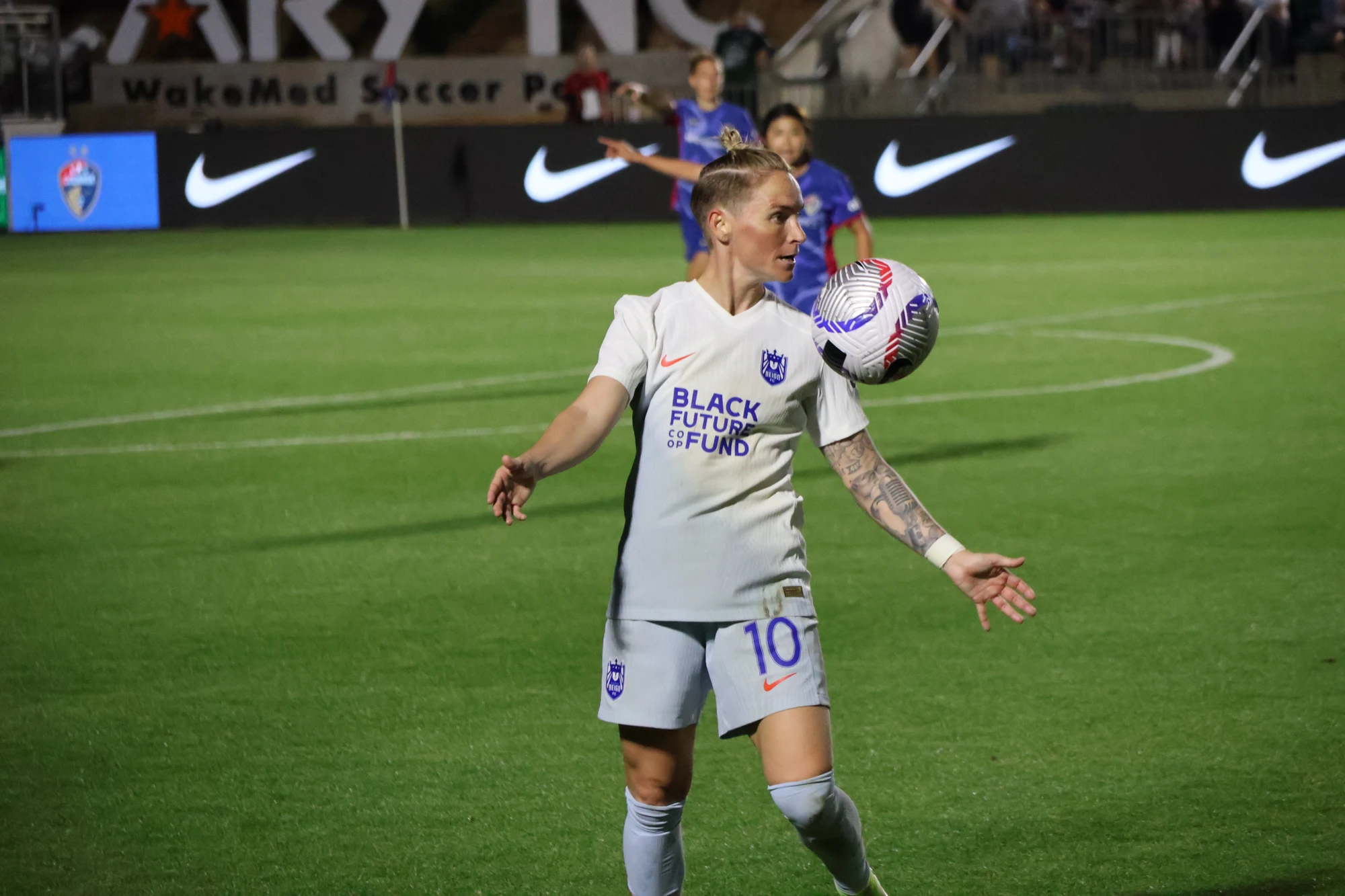
Photo: Hameltion / Wikimedia Commons · CC BY-SA 4.0 · North Carolina Courage vs. Seattle Reign, April 27, 2024. Archival photograph. Resized; display crops vary. Image adaptations retain the same license.
Jess Fishlock scored both goals in Seattle’s 2–0 win over Boston on September 25. They took her to 52 regular-season goals for the Reign, moving her past Megan Rapinoe as the club’s leader. The NWSL highlighted the milestone in its September 28 roundup. League coverage.
The record is a reason to look back. The goals are a reason to look more closely. For a midfielder, getting into a position to finish can involve several different jobs within the same attack: offering a passing option, advancing possession, bringing in a teammate and remaining available for the next ball.
Seattle’s account of the Boston match provides two useful examples. This is an analysis of those reported sequences, with links to the club’s goal clips. It is not a reconstruction of every player’s position or a verdict on Fishlock’s entire season.
Use the first opening
In the 23rd minute, Maddie Dahlien intercepted a pass near midfield and found Fishlock, who carried toward the penalty area and scored. That sequence is described in Seattle’s match report; the club also published the first-goal clip.
The useful starting point is the recovery. Possession changing hands creates a new question for both teams. The side that has won the ball must decide whether to attack immediately or secure it. The side that has lost it must reorganize while also dealing with the player now carrying it.
In this example, the first pass gave Fishlock a way forward. Her role was to turn that access into an attempt on goal. Describing the finish alone would leave out the teammate who recovered possession and supplied the ball.
For a player watching the clip, the question is not simply whether to shoot from a similar distance. Look first at the available space, the passing options and the pressure on the ball carrier. A shot is one possible conclusion to an attack. The conditions that make it possible are the part worth studying.
A pass can begin the next involvement
Seattle’s report describes a longer exchange for the second goal in the 64th minute. Ainsley McCammon found Fishlock, Fishlock played Dahlien wide, and Dahlien returned the ball for Fishlock to finish. Second-goal clip.
The distinction is that Fishlock appears twice in the same move. She helps progress the attack, then becomes the player who completes it. Giving the ball to someone else has not ended her contribution.
That is a useful principle for understanding midfield play. A pass changes the picture. It may move the point of attack, change the angle from which a defender approaches or create a different route back to the original passer. What happens after release can therefore be as important as choosing the pass.
The reported exchange does not establish Fishlock’s exact running line, the defender responsible for her or whether Seattle had rehearsed the move. Those would require closer evidence. What it does establish is a sequence in which combining with a teammate and finishing were parts of the same job.
| Goal | Reported sequence | What to watch |
|---|---|---|
| 23rd minute | Dahlien wins possession → Fishlock receives and carries → shot | The first option after the recovery. |
| 64th minute | McCammon → Fishlock → Dahlien → Fishlock finishes | The passer’s next involvement. |
The record belongs to a long relationship
Seattle announced in April that Fishlock would retire at the end of the 2026 NWSL season. She is the club’s last remaining player from its inaugural 2013 squad. Her record now sits within that long association, alongside a 2021 league MVP award and three NWSL Shields. Retirement announcement.
In a separate April club interview, Fishlock explained that the group around her had helped make another season appealing. Head coach Laura Harvey emphasized her responsibility to the collective. These are the club’s published interviews, not conversations conducted by GEN SOCCER. Fishlock and Harvey on the final season.
Those comments offer context for the connection between an individual milestone and a team performance. A scorer still needs the attack to reach a finishable position. The Boston sequences make the contribution of teammates visible without diminishing the quality required to score.
They do not explain physical longevity, prove that experience always defeats athleticism or show how her role has changed across fourteen seasons. A career deserves more evidence than a single match can supply.
A better way to watch a midfielder
On the next viewing, follow the player for a few seconds after she passes. Does she stay available, move away to open another lane or take up a position behind the attack? Then watch the receiver: can that player see the next option, or has the move become isolated?
After a recovery, follow the first two decisions. Who provides the outlet? Does the receiver have a forward option? If possession is lost again, where has the team left its protection? These questions work with an unsuccessful attack as well as a goal.
That last point matters. Highlights select the moments that worked. To assess a pattern, watch the attempts that broke down, the times a return pass never arrived and the possessions where retaining the ball was the better choice.
Fishlock’s two finishes give us a compact starting point: receiving and carrying in one attack, exchanging passes in another. The broader lesson is a way of paying attention. A midfielder’s influence continues between touches, and the final shot makes more sense when the whole exchange is kept in view.
Editorial note
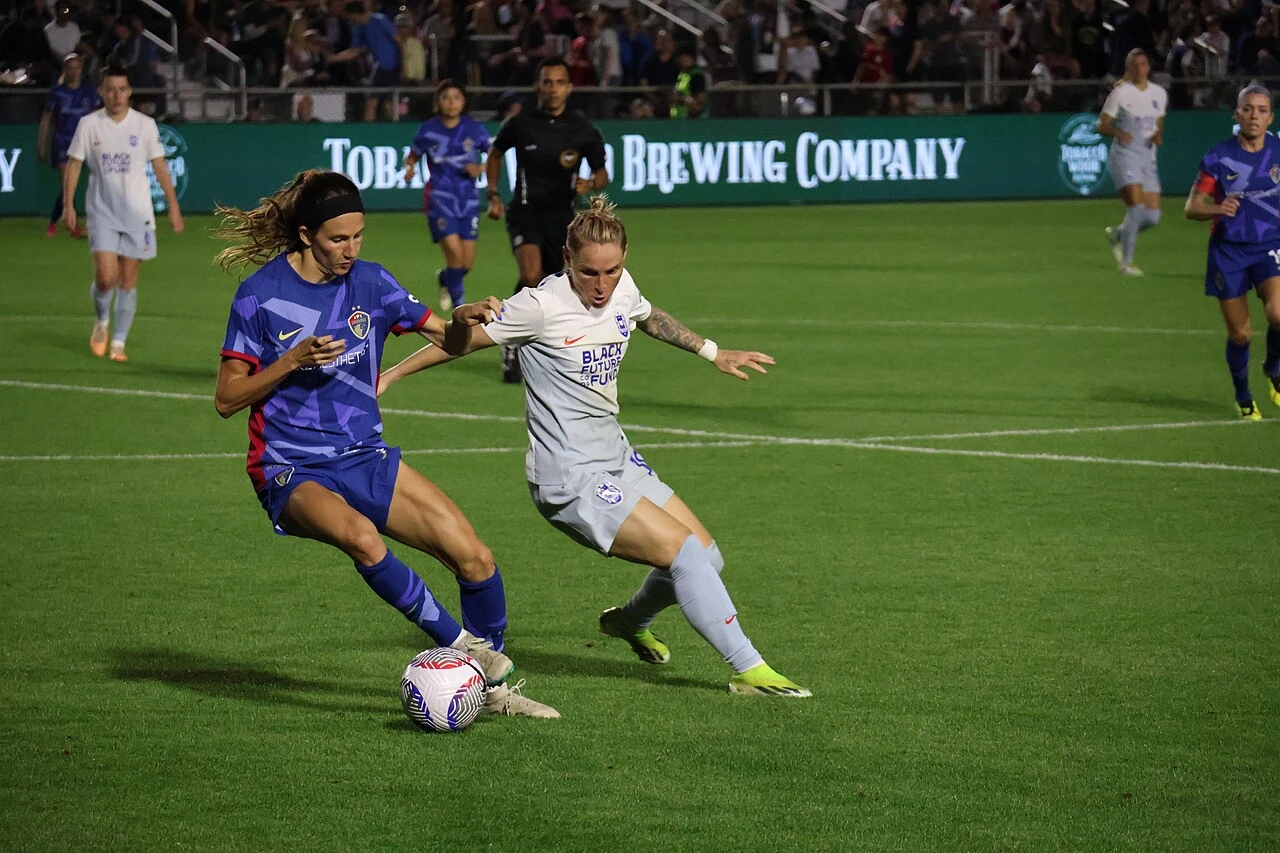
Source-based analysis checked September 29, 2026. Match descriptions are attributed to Seattle Reign; GEN SOCCER has not conducted interviews or a full-match video analysis for this article. The sequence table is not a positional diagram. Photographs are archival and do not depict the September 25, 2026 Boston match.Sources and further reading
- Seattle Reign: Boston match report, September 25, 2026
- NWSL: scoring milestones, September 28, 2026
- Seattle Reign: first-goal clip, September 25, 2026
- Seattle Reign: second-goal clip, September 25, 2026
- Seattle Reign: retirement announcement, April 21, 2026
- Seattle Reign: Fishlock and Harvey interviews, April 21, 2026
Continue reading

_102.jpg)
_093.jpg)