America + World · Feature
Scarlett Camberos: From Chula Vista to Club América
A Southern California upbringing, a college breakthrough and a career across two leagues. The football behind Camberos’ international recognition.
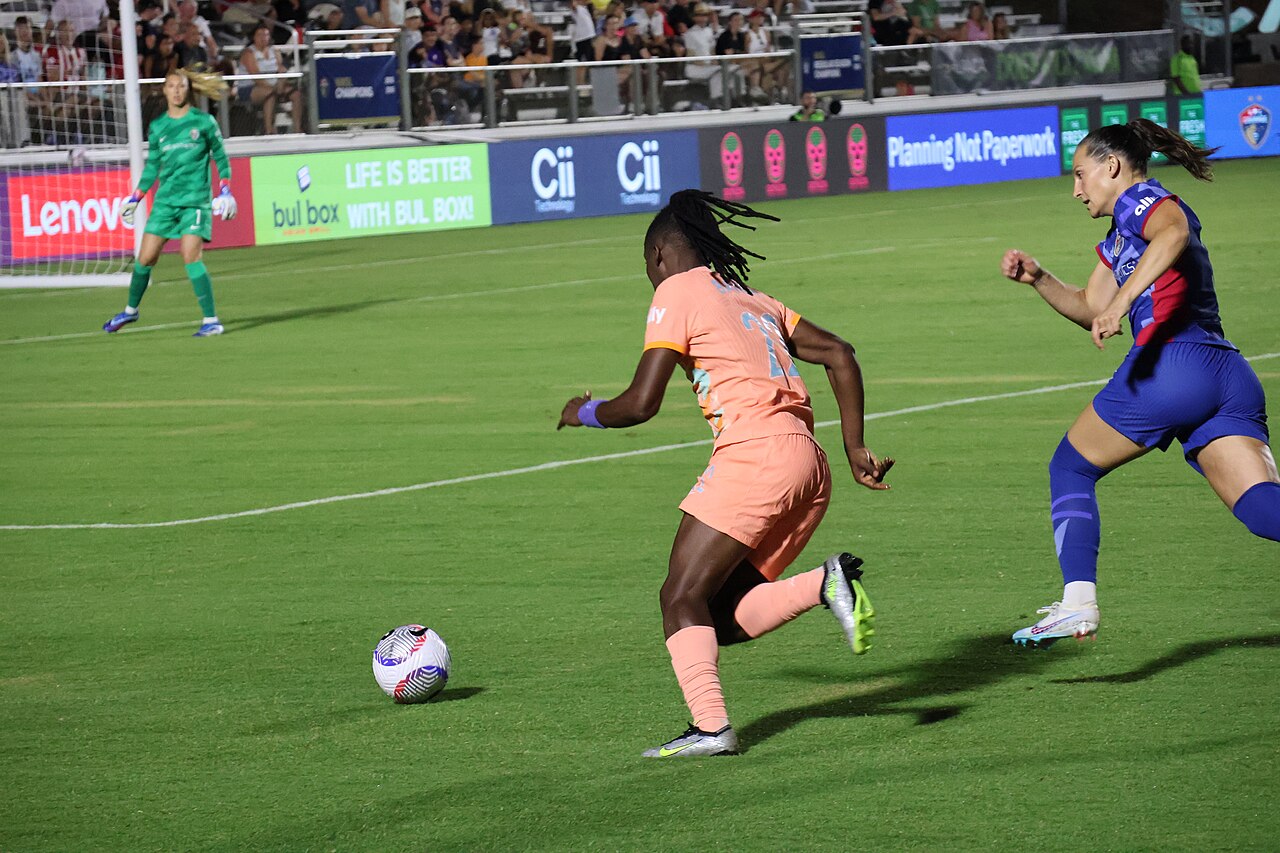
Photo: Chay4520 / Wikimedia Commons · CC0 1.0 · May 17, 2025 archive. Resized and cropped for display.
Before Scarlett Camberos appeared on a Ballon d’Or shortlist, she was a Southern California college player deciding where to begin her professional career. Club América offered that beginning. Her subsequent route through Mexico, Los Angeles and the Bay Area makes her story relevant on both sides of the border.
Camberos is among the nominees for the 2026 Women’s Ballon d’Or, announced on September 8. The recognition supplies a reason to revisit her career, but the more useful story is how she reached successive levels of competition. It includes a productive college season, an immediate scoring contribution in Mexico, a less prolific period in the NWSL and a return to América.
For readers in San Diego, there is a local starting point. For anyone following women’s soccer, there is a broader sporting question: how do we assess a player whose opportunities and performances have developed across different leagues?
The Southern California foundation
Camberos grew up in Chula Vista and attended Bonita Vista High School. Rebels Soccer Club identifies her as an alumna, connecting the professional player to the youth game in the San Diego area. Those affiliations matter because they make the early stages of her career specific. This was a player progressing through local teams before moving into college soccer.
At UC Irvine, her 2021 season provided a clear measure of attacking development: 13 goals and seven assists. She earned the Big West Offensive Player of the Year award. The university’s announcement of her professional signing also recorded three game-winning goals and two hat tricks.
Those figures describe a player contributing both finishes and the final pass. They do not, on their own, tell us how she would cope with professional defending. What they established was a substantial body of college production before her first contract.
When América signed her in December 2021, she joined a club that already included fellow UC Irvine alumni Janelly Farías and Kiana Palacios. The connection is a useful reminder that college soccer’s professional influence is not confined to American clubs. Its graduates can become teammates again in another country.
An immediate contribution in Mexico
Camberos’ first spell at América produced evidence that her attacking output could carry into the professional game. Angel City’s April 2023 introduction of her reported 11 goals in 16 appearances during the Clausura 2022 regular season, putting her joint third in the league’s scoring standings. Across that first América spell, the club profile credited her with 18 goals in 41 appearances.
There is an important distinction between those totals. The 11 goals belong to one regular-season tournament; the 18 describe a longer period. Keeping the timeframes separate gives a clearer picture than combining figures from different competitions into a single headline number.
The early scoring return makes Mexico central to her development as a professional. América was where she first accumulated senior club experience and demonstrated that she could affect results at that level. Her first senior appearance for Mexico followed in September 2022 against New Zealand.
The California return
Angel City signed Camberos in March 2023. Her move followed harassment in Mexico, a serious part of the public record that should not be reduced to a motivational device. This feature focuses on her documented playing career and does not infer private motives or claim an interview with her.
The NWSL chapter yielded a different statistical record. Bay FC’s later transfer announcement lists one goal and three assists in 19 regular-season appearances for Angel City in 2023, including 10 starts. Those numbers are more modest than her first tournament at América. They are not a controlled comparison of the two leagues: team role, minutes, opposition and circumstances all affect output.
Bay acquired her in December 2023 ahead of its inaugural season. She made 10 appearances, eight of them starts, before returning to América in July 2024. A career can include both a meaningful contribution and a short stay; the second fact does not erase the first.
One finish against San Diego
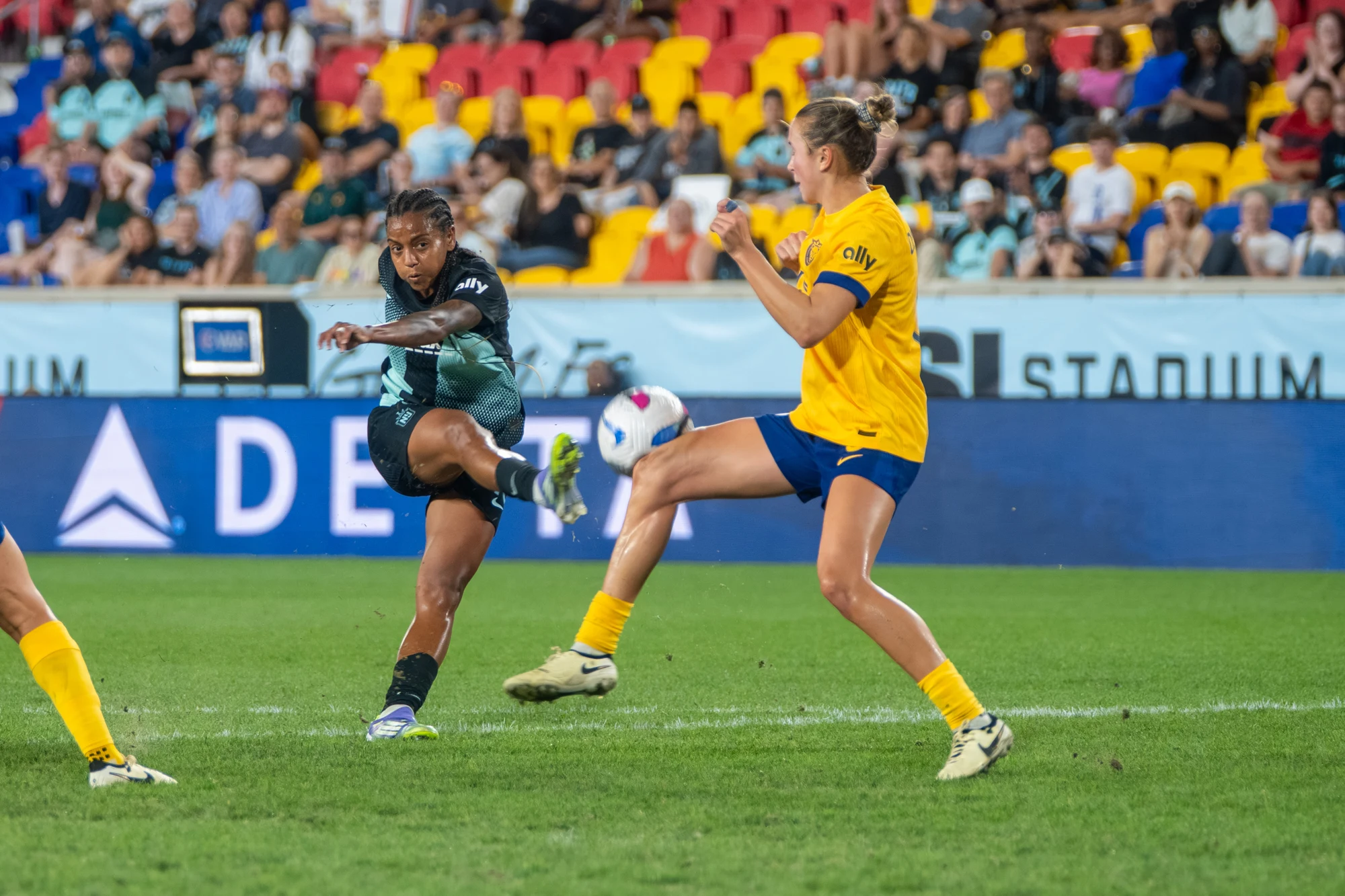
One of those contributions came against the team from her home region. On May 17, 2024, Bay beat San Diego Wave 2–1 at PayPal Park. Camberos scored the equalizer before the home side found a late winner.
Bay’s match report describes Kiki Pickett carrying through midfield and passing to Camberos on the left side of the penalty area. Camberos then curled her finish inside the far post. It is a concrete example of her contribution within a team move: a teammate advanced the ball, Camberos became available and the attack ended with her shot.
That written description supports an account of the sequence, not a full tactical verdict. Without reviewing the complete footage, we cannot reliably identify every defender’s responsibility or claim the move demonstrated a recurring pattern. It still gives the reader something more tangible than a label such as dangerous or dynamic.
The match also offers a small geographical detail that belongs in this story. A player developed in the San Diego area was contributing to another California club against San Diego. Her local connection remained meaningful even when she wore the opposing shirt.
Back at América, then wider recognition
Bay announced her transfer to América on July 15, 2024. By the 2026 Ballon d’Or nomination, she had a further body of work for the Mexican club. The award organizer’s player profile credits her 2025–26 season with 27 goals and seven assists across 47 matches, alongside the Concacaf W Champions Cup and Mexican Clausura titles.
Those are the organizer’s published season totals, rather than a claim that every contribution came in league play. They explain the scale of the campaign being recognized without requiring us to treat a nomination as a trophy or a final ranking.
The same official profile describes direct wide play and the ability to operate in more advanced positions. That is the organizer’s assessment. A detailed independent analysis would need a representative selection of matches, including periods when she was less involved, rather than highlights alone.
A career across two soccer environments
Camberos’ route is worth following because the sporting record has several distinct chapters. College production preceded professional opportunity. Strong scoring in Mexico was followed by a different experience in the NWSL. Returning to a former club then became another stage of her career rather than an endpoint.
None of that establishes a universal route for the next player. It does show why a development story should remain open to different destinations and different timescales. A player’s prospects cannot be read entirely from one season’s goals or one transfer.
For GEN SOCCER, the connection is direct: an American upbringing and college career form part of a Mexican international’s professional story. Understanding that career means paying attention to the matches, teams and opportunities in both countries. The nomination brings attention to Camberos. The work that preceded it is what makes her worth reading about.
Editorial note
Source-based profile; no original interview or independent match-film study is claimed. The Discover San Diego post supplied by a reader prompted this assignment. Award recognition refers to the nomination, not a result.Continue reading